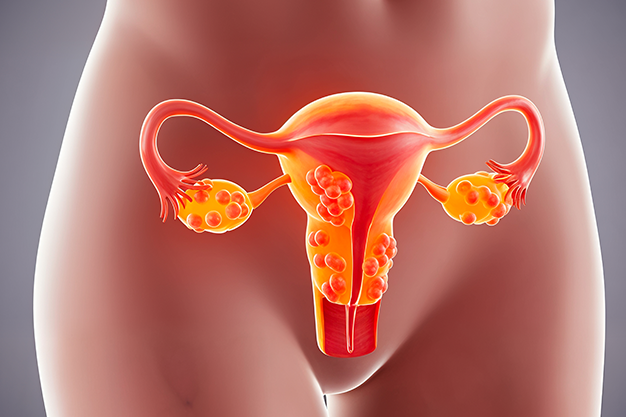
- Submucosal – Grow just under the lining of the uterine cavity; can cause heavy menstrual bleeding.
- Subserosal – Grow on the outer surface of the uterus; may press on nearby organs.
- Pedunculated – Grow on a stalk either inside or outside the uterus.
Causes & Risk Factors
The exact cause is unknown, but several factors contribute:
- Hormonal influence : Estrogen and progesterone stimulate fibroid growth.
- Genetics : Family history increases risk.
- Age : Most common in women aged 30–50.
- Other factors : Obesity, vitamin D deficiency, early menstruation, and certain ethnicities (more common in African-American women).
Symptoms
Many women are asymptomatic, but when symptoms occur, they may include:
- Heavy or prolonged menstrual bleeding
- Pelvic pain or pressure
- Frequent urination (if pressing on the bladder)
- Constipation (if pressing on the bowel)
- Back or leg pain
- Enlarged abdomen or “bloating”
- Infertility or pregnancy complications (rarely)
Diagnosis
- Pelvic exam – May detect enlarged or irregular uterus.
- Ultrasound – Most common imaging method.
- MRI – Useful for mapping size and location, especially before surgery.
- Hysteroscopy – For submucosal fibroids.